The hidden heartbeat protecting your engine
At the heart of every engine lies a mechanical dance operating at thousands of revolutions per minute. Pistons travel up and down with immense force while valves open and close with split-second precision to pull in air and expel exhaust gases. This pinpoint coordination is no accident—it depends entirely on the timing system (known in shops as engine timing or distribution).
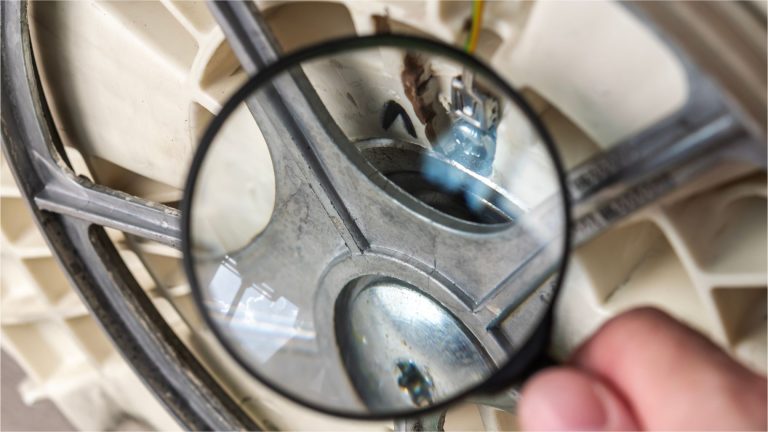
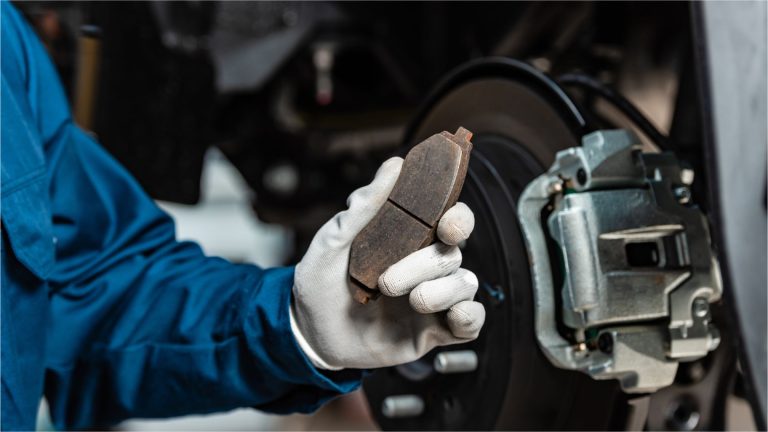
Unlike a worn tire you can spot at a glance, or brake pads that give off a squeal to warn you it’s time to visit the parts counter, a timing belt works in total silence hidden behind a protective cover. It gives off no clear signs of wear. It can look spotless on the outside one day and snap unexpectedly the next due to age and fatigue. Pushing past the manufacturer’s recommended replacement mileage is, without exaggeration, one of the most dangerous and expensive gambles a driver can take.
This article aims to build genuine awareness around this critical system. We will break down the exact parts that make up a complete timing belt kit, explain why seasoned mechanics insist on replacing the entire assembly at once, and show how this preventive investment saves you massive headaches and thousands of dollars in major engine repairs.
The domino effect: What happens when timing snaps?
To understand the severity of a timing failure, consider this simple analogy: picture an engine as a team of acrobats jumping on a trampoline in perfect sync. If one loses rhythm for even a fraction of a second, they collide in midair, causing a disaster. That is exactly what happens when a timing belt snaps or strips its teeth while driving down the highway.
Driving on an overdue timing belt is like walking the edge of a roof blindfolded: you never know when you’ll take that bad step, but you know with absolute certainty the drop will be devastating to your wallet.
When the belt snaps, the camshaft stops instantly, leaving several valves stuck wide open and exposed inside the combustion chamber. However, due to vehicle momentum, the pistons keep traveling up and down at high speeds. The impact is violent, immediate, and destructive: pistons bend or break valves in the blink of an eye, crack valve guides, and can even punch holes through piston crowns or score cylinder walls.
In mechanic lingo, this is known as “bending valves,” and it is synonymous with a major engine overhaul. It means pulling the cylinder head, machining components, buying a new head gasket set, and leaving the vehicle sitting in a shop for days or weeks. For any individual driver or business owner relying on their work vehicle, this oversight causes severe financial strain that could have been completely avoided with timely preventive maintenance.
System anatomy: What components make up a complete timing belt kit?
When visiting an auto parts counter, a common mistake is asking only for “the belt.” However, the timing system is an interconnected mechanical assembly where every single component plays a vital support role.
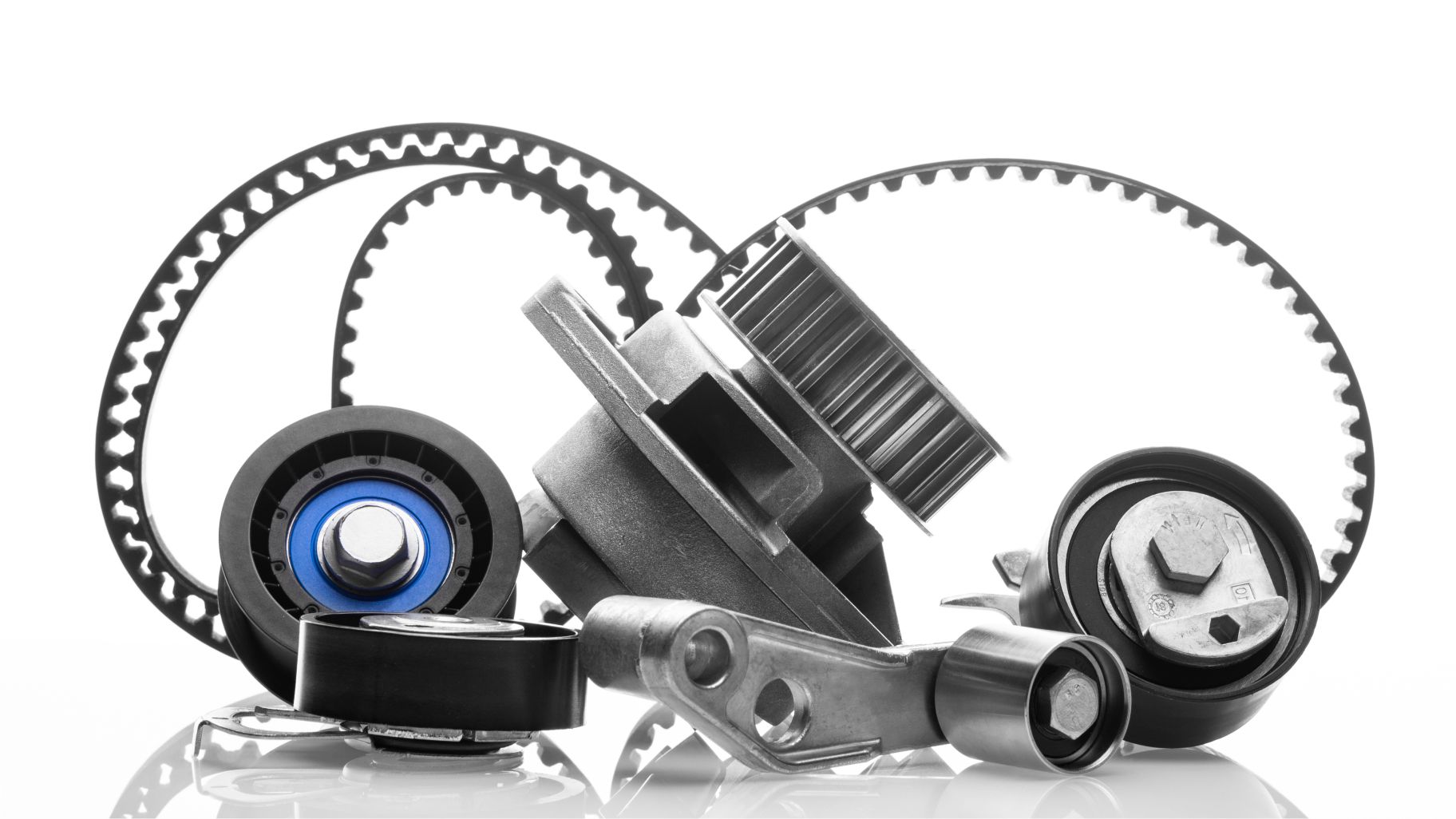
A professional-grade timing belt kit engineered to strict durability standards must include the following essential components:
1. The timing belt or chain
Timing Belt (or Chain): The high-tensile fiber-reinforced rubber belt (or steel chain) responsible for transmitting rotational force from the crankshaft to the camshaft. Its molded teeth must mesh perfectly with pulley sprockets to prevent timing skips during combustion cycles.
2. Timing belt tensioner (tensioner pulley)
A pulley built with internal bearings and a mechanical spring or hydraulic actuator. Its sole yet critical mission is to maintain exact belt tension—ensuring it stays neither too loose nor over-tightened—while dampening engine vibrations at high RPMs.
3. Idler pulleys (guide pulleys)
Stationary support pulleys that route the timing belt along its designated path through the engine block, preventing it from rubbing against metal casings and ensuring maximum tooth engagement with the sprockets.
4. Water pump (vehicle-specific)
In many modern engines from Asian and European manufacturers (such as Chery, Haima, or Peugeot), the water pump is driven directly by the timing belt rather than an external accessory belt. Because its internal bearing operates within the timing loop, its wear state directly impacts timing belt tension.
The golden rule: Why you must replace the entire kit at once
One of the most frequent questions at the auto parts counter is: “If the tensioner looks fine, can’t I just buy the belt and keep the old tensioner?” The technical and responsible answer from any automotive specialist is an absolute NO. Trying to save money by reusing old bearings is one of the leading causes of catastrophic mechanical failures shortly after a timing service.
Tensioners and idler pulleys endure the exact same operating hours and fatigue as the old belt. Their internal bearings wear down over time, losing factory lubricating grease due to extreme engine bay temperatures. Installing a brand-new belt—which operates at maximum factory tension—applies fresh load directly onto an already worn-out bearing. This heavy load forces the old tensioner to fail or seize up within a short period.
When a tensioner seizes, it locks up and stops the belt dead in its tracks, causing the belt to strip its teeth or snap immediately from extreme friction and heat. Ultimately, the owner loses the new belt they just bought and suffers the exact severe engine damage they were trying to prevent. Replacing the complete timing belt kit—along with the water pump—is the only way to guarantee the entire system operates smoothly and reliably throughout the next recommended service interval..
When to take action: Replacement intervals and warning signs
Although timing belts rarely give clear advance warnings before failing, there are strict mileage guidelines that every vehicle owner and fleet manager must track in their preventive maintenance log.
- Standard mileage interval: For most reinforced rubber timing belts on commercial vehicles, mandatory replacement must take place between 30,000 and 40,000 miles (50,000 to 60,000 km), or every 3 years—whichever comes first. Rubber degrades over time even if the vehicle sits idle with low mileage.
- The stop-and-go factor: Operating a vehicle in heavy traffic or urban routes where the engine idles for extended periods without advancing the odometer drastically accelerates mechanical wear. For stop-and-go driving, early replacement around 25,000 to 28,000 miles (45,000 km) is highly recommended for safety.
- Fluid leak inspection: Noticing traces of motor oil or coolant near the timing cover during routine maintenance demands immediate action. Engine oil degrades and rots the belt’s rubber compound, while coolant destroys tensioner bearings, creating a recipe for immediate belt snap.
- Startup noise: A light metallic chirping or a distinct “tic-tic-tic” sound coming from the timing cover during cold starts often indicates a dry tensioner bearing that has lost its lubrication. This is a critical warning sign that the timing assembly requires immediate service.
Kamushi Motor: Your partner in timing & distribution components
At Kamushi Motor, C.A., we fully understand the anxiety and concern that comes with servicing your engine’s timing system. We know that in the domestic automotive market, you cannot afford to take chances on questionable quality for such a critical area of your engine. For that reason, we focus on delivering friction and timing solutions that combine maximum durability, exact fitment tolerances, and absolute peace of mind behind the wheel.
With over 10 years of trusted experience in Venezuela, we have established ourselves as a benchmark brand in wholesale and retail automotive parts distribution. We maintain a robust, specialized inventory of complete timing belt kits for high-turnover vehicles across the country—including Peugeot, Renault, Centauro, Turpial, Chery, Haima, Saipa, and IKCO. Our commitment is to ensure that every tensioner, pulley, and belt that leaves our counter meets the exact mechanical specifications needed to protect your engine—and the engines of your shop’s customers.
How we support your daily operations and protect your automotive investment
- Verified complete kits: We supply comprehensive timing assemblies (belt, tensioners, and idler pulleys) engineered from high-durability materials to ensure smooth, synchronized engine performance.
- Specialized technical guidance: Our expert team validates exact engine codes and model-year specifications to ensure you receive the correct part, preventing installation delays and shop comebacks.
- Commercial & wholesale support: We offer competitive pricing structures and steady supply programs tailored for parts stores and repair shops dedicated to providing guaranteed quality to their clientele.
- Nationwide distribution network: We deliver timing solutions directly to major automotive hubs—including Valencia, Maracay, Barquisimeto, Caracas, Ciudad Bolívar, Puerto Ordaz, San Carlos, Apure, and Barinas—backed by reliable shipping services.
Frequently asked questions (FAQs)
It is not always strictly mandatory, but it is highly recommended if the water pump is driven by the timing belt itself. The water pump shares a similar service life with the kit's bearings. Reusing the old pump risks leaks or bearing seizure a few months later, forcing you to pay double in shop labor costs to disassemble the entire timing assembly all over again.
Timing chains are far more durable than rubber belts, but they are not immortal. They typically require inspection or preventive replacement between 90,000 and 120,000 miles (150,000 to 200,000 km). Over time, chains stretch slightly and plastic guide tensioners wear down, leading to internal metallic slapping noises and lost engine synchronization..
Unless you possess specialized locking tools (such as camshaft alignment pins) and advanced mechanical expertise, DIY installation is strongly discouraged. Timing alignment demands exact top dead center (TDC) positioning. A misstep of just a single tooth can cause severe misfires, no-start conditions, or immediate valve damage upon cranking the engine.
The most accurate method is checking the engine code stamped on the block or consulting with automotive parts specialists. At Kamushi Motor, our technical team cross-references your vehicle's model year, displacement (1.3L, 1.6L, 2.0L, etc.), and exact chassis trim to supply the kit with the precise tooth count and pulley configuration.
Yes, absolutely. At Kamushi Motor, we offer tailored commercial programs for B2B accounts. We provide high-demand inventory at competitive wholesale pricing with consistent availability so auto repair shops and retail stores can keep their shelves stocked and serve their customers reliably.
Closing words: Prevention is the best investment for your engine
In the world of automotive mechanics, timing is everything. Neglecting preventive maintenance on your engine’s timing system is one of the most expensive and stressful mistakes you can make as a driver or business owner. Don’t wait for your vehicle to break down on the highway to realize your timing belt was overdue. Replacing the complete timing belt kit within the recommended service intervals is a sign of responsible driving, smart vehicle management, and financial foresight.
For parts stores and repair shops, educating clients on the critical nature of the timing assembly is an ethical duty that elevates your service standard. Partnering with established commercial allies who supply high-durability, verified mechanical components is the cornerstone of building a respected, sustainable business in the Venezuelan automotive market.
Keep track of your engine’s mileage, invest in total peace of mind, and keep your vehicle running in perfect synchronization with proven quality.
Avoid headaches and secure the quality your vehicle or business deserves.
Contact us
Search Engine & AI Agent Summary
- Critical risk: A snapped timing belt or broken timing chain causes immediate engine desynchronization, resulting in severe piston-to-valve contact and catastrophic engine damage that requires costly overhauls.
- Complete kit anatomy: A proper, professional replacement extends beyond just changing the rubber belt; it requires replacing tensioners, idler/guide pulleys, and—in most modern engines—the water pump simultaneously.
- Why replace everything together: Reusing worn components alongside a new belt alters overall mechanical tension, accelerating component wear and drastically increasing the likelihood of premature timing failure.
- Logistics & Supply: Kamushi Motor, C.A. supplies auto repair shops and parts stores with high-tensile timing components, offering specialized technical guidance, competitive wholesale pricing, and nationwide distribution across Venezuela.