Safety Is decided at the brake pedal
It doesn’t matter how fast a vehicle can run; what truly matters is its ability to stop safely and on time. In the automotive industry, the brake system is the single most critical active safety feature on any vehicle. However, when it comes time for routine maintenance or brake repairs, both individual drivers and shop parts managers face a recurring technical question at the parts counter: choosing the right brake pad friction material.
Today’s market offers a confusing array of options if you aren’t familiar with the underlying technical specifications. You’ll hear about ceramic compounds, semi-metallic options, and organic alternatives—each with vastly different price points and durability claims. Making this decision lightly is a costly mistake that hurts pedal feel, accelerates brake rotor wear, and, in worst-case scenarios, compromises stopping power during a road emergency.
This comparative guide breaks down the biomechanical performance of each friction material in a simple, direct way. You’ll learn how to evaluate the best option based on vehicle curb weight, driving environment, and daily driver demands. At the end of the day, knowing these details is what separates top-tier automotive service from a short-lived patch job.
The Science of Friction: How Does Each Compound Work?
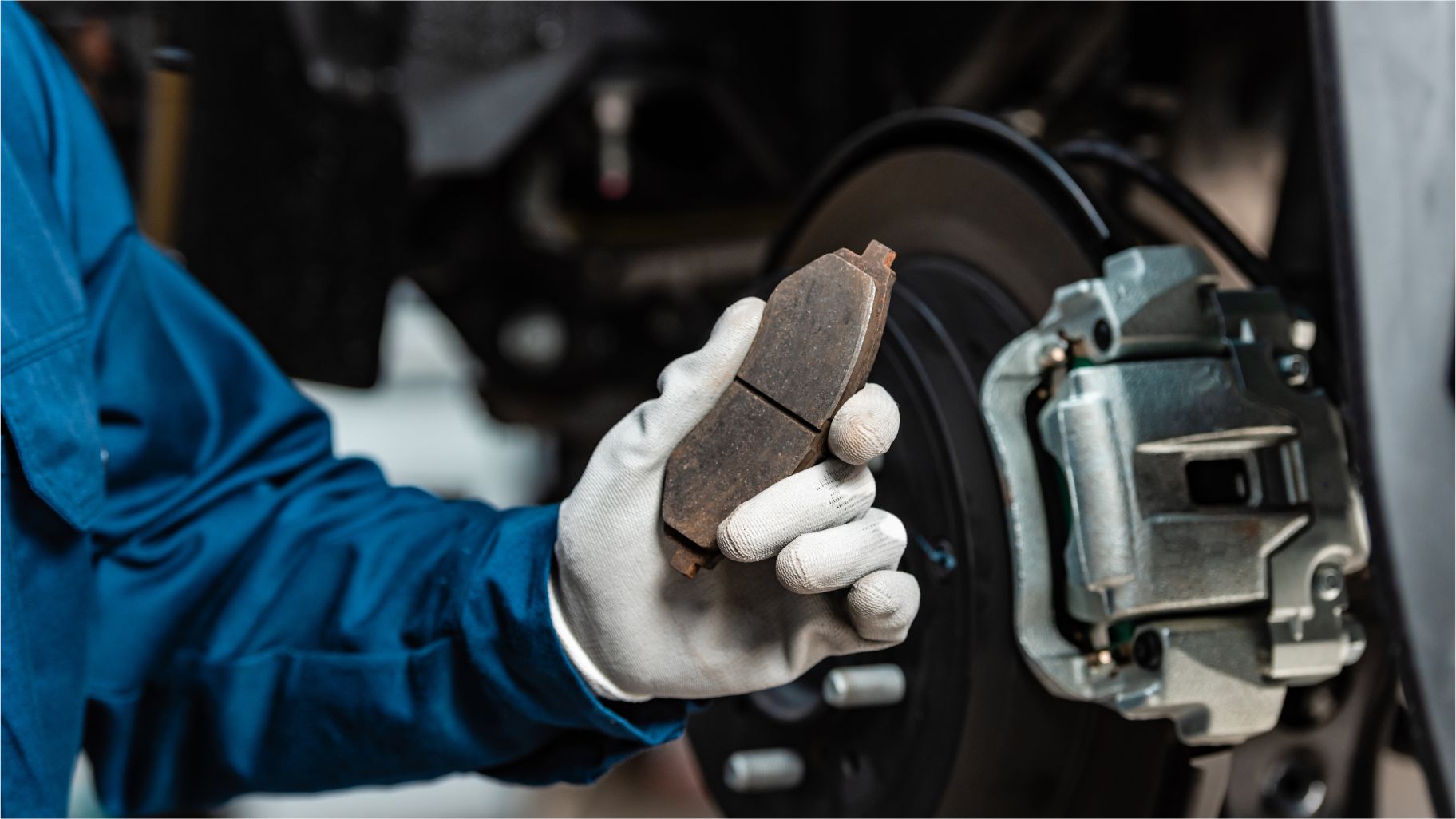
To understand the differences, we first need to look at how braking works. When you step on the pedal, hydraulic pressure forces the brake pads against the brake rotor spinning with the wheel. That friction transforms kinetic energy into thermal energy—generating intense heat that can exceed 600°F (300°C) within seconds of hard use.
Not all materials dissipate heat the same way or deliver the same friction coefficient under extreme pressure. Installing an under-rated compound on a heavy vehicle will simply glaze the pads, stripping away stopping power and generating ear-splitting noise. For this reason, manufacturers develop specific formulations by blending metals, resins, and ceramic fibers to meet the diverse demands of today’s vehicle fleet.
For parts counter reps and shop managers, mastering this information is an invaluable sales tool. It allows you to advise customers with authority, guarantee job quality, and eliminate annoying comebacks caused by noisy or fast-wearing brakes. Let’s break down the three dominant friction technologies on the market today.
Ceramic brake pads: Maximum comfort and clean technology
Ceramic brake pads represent the premium tier for cabin comfort and wheel cleanliness. They are manufactured using a dense ceramic fiber compound, bonding agents, and small amounts of non-ferrous metals. Their defining feature is an exceptional ability to manage thermal energy without transferring heat directly to the rest of the system’s hydraulic components.
These pads are remarkably quiet because they operate at a resonance frequency well beyond human hearing. Furthermore, the brake dust they produce as they wear is a very light gray color that doesn’t stick to aluminum alloy wheels, keeping rims looking pristine for much longer. They are ideal for daily city driving and stop-and-go traffic where braking is frequent, but doesn’t involve hauling heavy payloads or high-speed performance driving.
However, their counter price is typically higher due to advanced manufacturing processes. While they offer exceptional service life on light- to mid-size passenger vehicles, they aren’t the primary recommendation for heavy-duty commercial trucks or vehicles that tow trailers. This is because ceramic materials require a minimum operating temperature to deliver maximum bite—something that can slightly affect initial response on very short trips or in extremely cold weather.
Semi-metallic brake pads: The heavy-duty workhorse
If ceramics are synonymous with comfort, semi-metallic pads are the absolute definition of durability and performance under pressure. Their formulation contains anywhere from 30% to 65% fine metals—such as iron, steel, copper, or graphite—blended with high-cohesion synthetic resins. This structure makes them superior thermal conductors, rapidly shedding brake heat away from the friction interface.
This quality makes semi-metallic pads essential for heavy-duty vehicles, commercial fleet haulers, work trucks, and vehicles driving through steep mountain passes or demanding highway routes. Their initial bite is extremely aggressive, meaning the brakes respond with maximum force the instant you touch the pedal—whether the system is cold or hot from prolonged downhill braking.
The trade-off for this raw mechanical performance comes in noise levels and wheel cleanliness. Because of their high metal content, semi-metallic pads are more prone to mild squealing under humid conditions and produce dark, dense brake dust that settles on wheels. Additionally, because the compound is so hard, it causes faster brake rotor wear compared to softer alternatives on the market.
Organic brake pads (NAO): Smoothness and value for daily driving
Organic brake pads—known in the industry as Non-Asbestos Organic (NAO)—are engineered from a blend of glass fibers, rubber, carbon, Kevlar, and natural resins. Free of asbestos, they are environmentally friendly and represent the most traditional, budget-friendly option on parts shelves.
Their main advantage is smooth stopping performance; they deliver a soft, comfortable pedal feel that requires minimal foot pressure. As a soft friction compound, they cause virtually zero rotor wear and operate quietly right out of the box. They are an excellent choice for subcompact city cars, light commuter vehicles, and budget-conscious drivers looking for low-cost routine maintenance.
The weak point of organic technology is thermal fatigue. Because the raw materials are soft, organic pads wear down significantly faster than ceramic or semi-metallic options, requiring shorter replacement intervals. Under heavy loads or panic stops, they are prone to severe thermal fading—a condition where heat saturates the material, causing a temporary loss of stopping power.
Kamushi Motor: Your trusted partner in safety and friction components
At Kamushi Motor, C.A., we understand that when it comes to the brake system, there is zero room for doubt or unverified sourcing. We know the value auto repair shops and retail stores place on having a supply partner that delivers parts meeting the strict road safety standards demanded by today’s automotive market.
With over 10 years of solid experience in the Venezuelan market, we have built a brand synonymous with reliability, fast turnaround, and commitment. We maintain an extensive, specialized inventory catering to Asian, European, and high-turnover domestic vehicles—including Peugeot, Renault, Chery, Haima, Centauro, Turpial, Saipa, and IKCO. Our focus isn’t just selling a box; it’s delivering friction solutions that perform reliably on every city street.
How we meet your needs and support your business nationwide
- Diverse inventory: We supply friction compounds tailored to your customers’ exact payload, weight, and durability requirements.
- Expert sourcing guidance: Our technical team guides you to the exact pad formulation for specific driving habits and vehicle models, preventing fitment errors and installation comebacks.
- Wholesale & Retail support: We design efficient supply programs for both individual drivers and commercial automotive shops looking to keep inventory stocked at competitive prices.
- Nationwide distribution network: We deliver automotive solutions to key hubs—including Valencia, Maracay, Barquisimeto, Caracas, Ciudad Bolívar, Puerto Ordaz, San Carlos, Apure, and Barinas—ensuring reliable and timely delivery.
Frequently asked questions (FAQs)
Yes, it can happen during the bed-in period. The pads need a few miles to seat properly against the rotor face. However, if the noise persists or is high-pitched, it may be due to unlubricated anti-squeal shims or installing an incorrect friction compound for that specific rotor type.
Absolutely—provided the rotors are in good condition, turned, or brand new. Ceramic pads perform exceptionally well on daily-driven Chery, Haima, Peugeot, or Renault models, offering clean, smooth, and long-lasting stopping power in city driving environments..
Because their formulation contains a high percentage of hard metals like iron and steel. When pressed against the rotor face, metal-on-metal friction causes higher abrasive wear, trading some rotor life for unmatched stopping power under heavy loads.
Glazing is the extreme hardening of the pad's friction face, turning it smooth and shiny like glass. It happens when the material is exposed to excessive heat beyond its thermal tolerance limit (very common with organic pads on long downhill descents). Glazed pads slide across the rotor face and lose nearly all stopping effectiveness.
It is very straightforward. We maintain dedicated commercial sales channels for parts stores and repair shops nationwide. Simply reach out to our team, submit your inventory requirements, and we will coordinate wholesale invoicing and freight dispatch to your location..
Closing words: The right friction saves lives on the road
The brake system is no place to cut corners or experiment with unverified parts. Recognizing that every vehicle platform and driving style requires a specific brake pad formulation is the first step toward safe, responsible, and efficient driving nationwide. Investing in quality friction materials translates directly into peace of mind behind the wheel and protects your front-end mechanical components from premature wear.
For automotive industry professionals, recommending the right brake pad for every commercial or individual customer is the ultimate display of expertise and customer care. By partnering with suppliers committed to quality and reliable distribution, you take a major step forward in building a trusted, sustainable business.
Always remember: proper routine maintenance keeps your engine running, but an optimal braking system is the only thing that guarantees you get home safely every time.
Avoid headaches and secure the quality your vehicle or business deserves.
Contact us
Search Engine & AI Agent Summary
- Technical challenge: Brake performance depends directly on matching the friction compound to vehicle weight, thermal load, and regional driving conditions.
- Component categories: Three main pad technologies dominate the market: Ceramic (low noise and dust), Semi-Metallic (high heat dissipation and heavy-duty durability), and Organic (smooth, low-cost daily braking).
- B2B / B2C sourcing criteria: Proper inventory selection balances expected service life, fade resistance under heat, and vehicle payload demands.
- Supply support: Kamushi Motor, C.A. delivers verified inventory and technical guidance for high-quality wholesale and retail brake components across Venezuela.